
How to Recognise a Panic Attack?
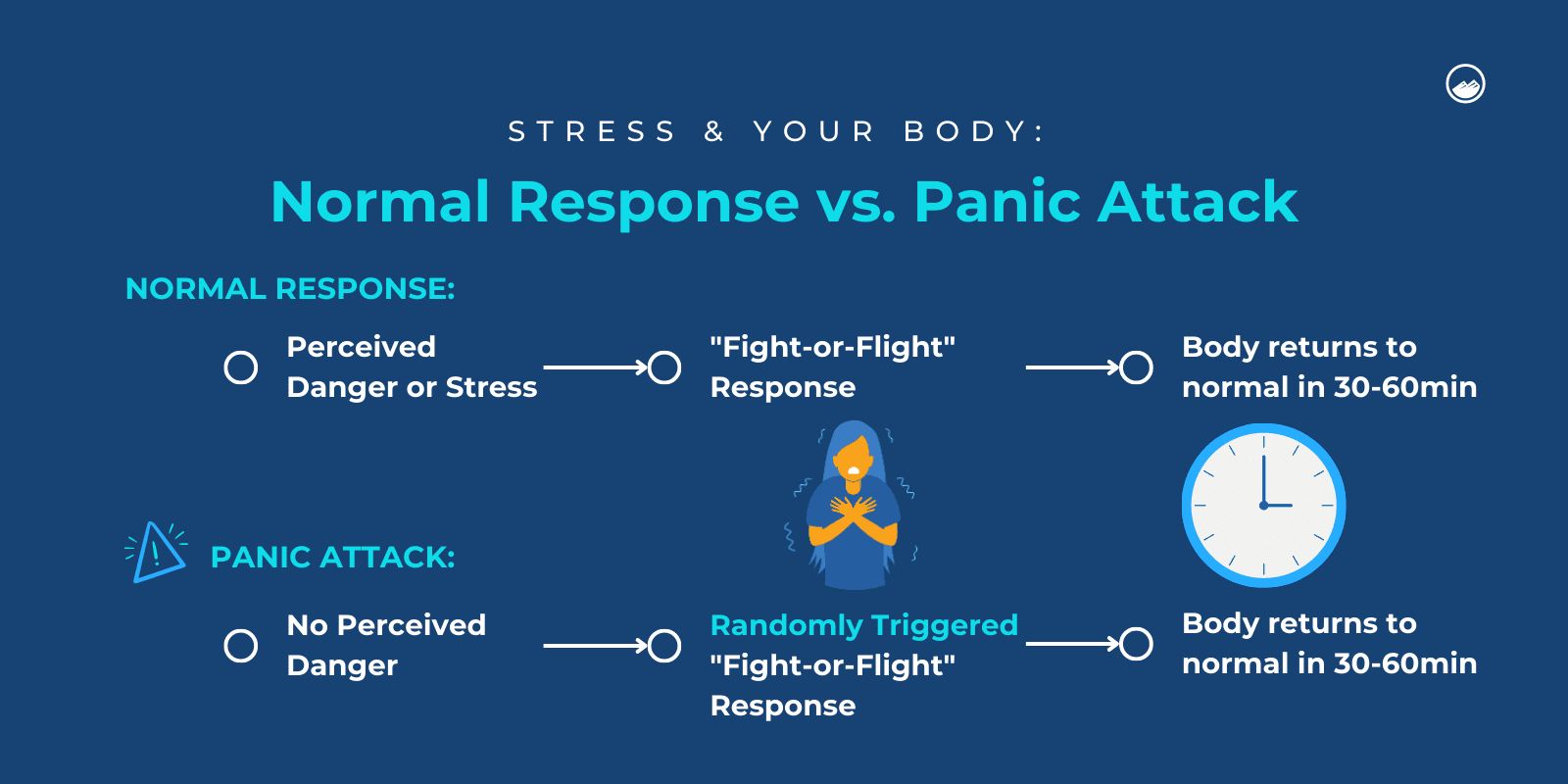
Today about PANIC ATTACKS.
I believe each person should know symptoms and differences between panic attacks and anxiety and how to help yourself or other people who experiencing panic attack.
Many people battle daily: at home, at work, in their minds, with themselves, with the projections of injustice in life, with their fears, and so on. If this “state of war,” or more accurately, aggression directed at something or someone, persists and a person eventually becomes a hostage to it, a panic attack (PA) may occur.
It’s a rather frightening experience (for the person going through it) but not life-threatening. ‼️
However, it is essential to distinguish it from other conditions with similar symptoms (e.g., a heart attack).
I will share how to recognize and manage PA.
A calm mind in stressful situations is especially important‼️
HOW TO RECOGNIZE A PANIC ATTACK?
External indicators (these can range from very mild to acute):
sweating, flushing, trembling hands, hot/cold waves, fluctuating pulse, fear, chest pain (not spreading to the back, arms, jaw, or stomach), shortness of breath, the urge to cry, rapid speech, or broken conversation.
Accompanying thoughts:
• “I’m dying.”
• “I’m losing my mind.”
• “I don’t want to die.”
• “Is this real, or am I dreaming?”
• “It feels like my heart will stop or is beating out of control!”
• “I’m going to vomit.”
• “Something terrible is about to happen; I can feel it!”
WHAT TO DO?
If this is the first time and you’re struggling to understand what is happening—call for help, reach out to loved ones.
If it’s not the first time and you recognize it, follow these steps:
❤️Breathe! You need oxygen to activate the neocortex in the brain (responsible for sensory/spatial/language perception).
Simply take 10 deep breaths in and out.
• When oxygen is low, you may experience a “noise” in your ears, a sense of faintness, increased heart rate, cold limbs, shortness of breath, dizziness, etc. But unlike life-threatening conditions, consciousness is not lost.
❤️Move physically!
• Jump in place while clapping rhythmically.
• Do a few squats.
• Clap your hands or gently rub your ears up and down.
• Take a few steps forward and back (with someone’s supervision if necessary).
• At the very least, march in place calmly for at least 2 minutes.
• Monitor your condition (if it’s the first time and you’re unsure it’s PA, don’t overexert yourself).
❤️Do not lower your eyes!
• It’s crucial to find a focal point on the horizon or look upward. Lowering your eyes subconsciously activates emotional responses, which are already heightened during PA.
❤️Repeat affirmations, even if it’s hard.
• Say phrases like:
• “I will get through this.”
• “Everything passes, and this will too.”
• “This is temporary.”
• “I’m doing great.”
• Do not deny your emotions. Acknowledge them:
• “I’m very scared right now, but I can handle this.”
• “This feels terrible, but I allow myself to leave this state.”
Also you can repeat Alhamdulilah, Astaghfirullah, Allahu Akbar. ❤️
Even if these phrases seem meaningless at that moment, your subconscious will start working.
❤️Speak out loud—release the panic! If necessary, scream it out. While others might find it alarming, you will feel relief.
❤️Distract your thoughts.
• Try to remember tasks you need to complete, calls to make, or errands to run. During PA, this redirects the brain’s focus.
• If you’re supporting someone experiencing PA, ask simple daily questions:
• “What did you do today?”
• “Who do you need to call?”
AND FINALLY…
Today’s realities force everyone to confront their own heroism/weakness/conscience. For each person, this is their own “battle”:
• Some silently rejoice (“not in my backyard”).
• Others just live their lives.
• Some feel aggression toward one side and become part of it.
• Some stay on the sidelines and gossip.
• Others pray quietly for peace in the world.
• Some dedicate all possible efforts and resources to help tangibly.
• Others flee/hide/save their children’s lives.
• Some stand and fight, facing the enemy with their chest.
This is everyone’s personal truth and understanding of how to act in any given situation, and each one has their own truth. But truth turns into war when “one’s truth becomes obligatory for the other side.”
So, I invite everyone to remain human in all respects. Help, but don’t become another aggressor—neither toward others nor yourself.
Wishing peace and harmony in the world and calmness in your hearts!
Have a blessed Friday . ❤️